
Info and news from the world of cosmetics
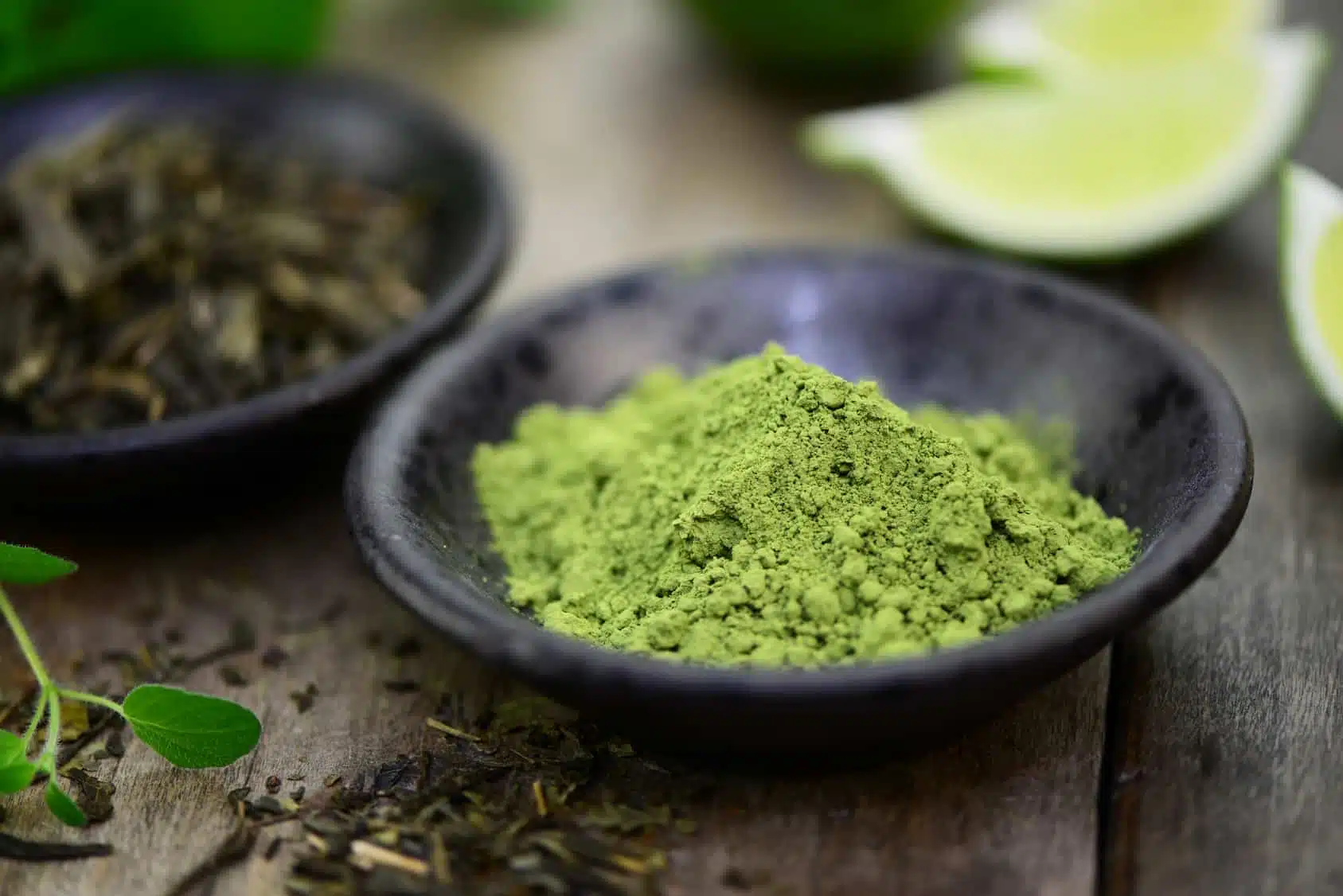
Green tea extract, extracted from the leaves of this evergreen, highly branched shrub, plays a central role in many aspects of our lives. From drug extraction to use in cosmetics and health products, this extract has a diverse range of applications. In this article, we will take a closer look…

The harp shrub Plectranthus barbatus is native to tropical regions of Africa, China, India, and the Arabian Peninsula. It belongs to the labiates family and is a semi-shrub. With its beautiful purple-blue flowers and relatively large foliage leaves, it is extremely attractive to look at. But the peculiarity of the…

Ellagic acid, a member of the polyphenol family, has gained attention for its exceptional antioxidant properties. It is found in abundance in several fruits and can also be extracted from the leaves and seeds of corresponding plants. Fruits such as raspberries, strawberries, walnuts, and pomegranates are particularly rich sources of…

Succinic acid, also known butanedioic acid, is a crystalline, colorless, aliphatic dicarboxylic acid that is a metabolic intermediate in both the citric acid cycle and the urea cycle. The formation of succinic acid is due to the oxidation of succinyl-CoA, which in turn results from the metabolic process of carbohydrates,…

Today, well-cared for feet and stylish shoes are important components of a perfect appearance. However, many people are more concerned with fashion trends than comfort. If shoes are too tight, causing pressure points, or if the lining rubs against the skin, this can lead to uncomfortable blisters and, in the…

Vitamin C is one of the most researched vitamins of all. It is a powerful antioxidant that reduces wrinkles, helps fight bacterial infections, and has a great effect on the formation of collagen. Unfortunately, it is not very stable, which is why ethyl ascorbic acid (EA) is increasingly used in…

Hydrating face masks can be found in almost every cosmetics cabinet. They bring our skin back into balance and are simply part of an extensive care ritual. The ingredients of the beauty boosters penetrate into the upper layers of the skin and, depending on their composition, can have a moisturizing,…

The number of potential allergens to be declared in future has been published in a new allergen list. A new Regulation (EU) 2023/1545 of 26 July 2023 amending the Annexes to the EC Cosmetics Regulation was published in the Official Journal of the EU of 27 July 2023 (L 188).…

As useful as our bees are, a sting is usually very painful and unpleasant. The swelling, pain and itching are caused by the bee venom, which the bee injects into its “opponent” via the venom sting. In the worst case, bee venom can even trigger life-threatening allergic reactions: One more…

extrFennel (Foeniculum vulgare) as a plant species belongs to the genus Apiaceae and is used as fennel extract in cosmetics. The Latin term means hay. From a fist-sized white bulb grow long stems on which feathery leaves and at the end are yellow flowers. The extract is obtained from the…